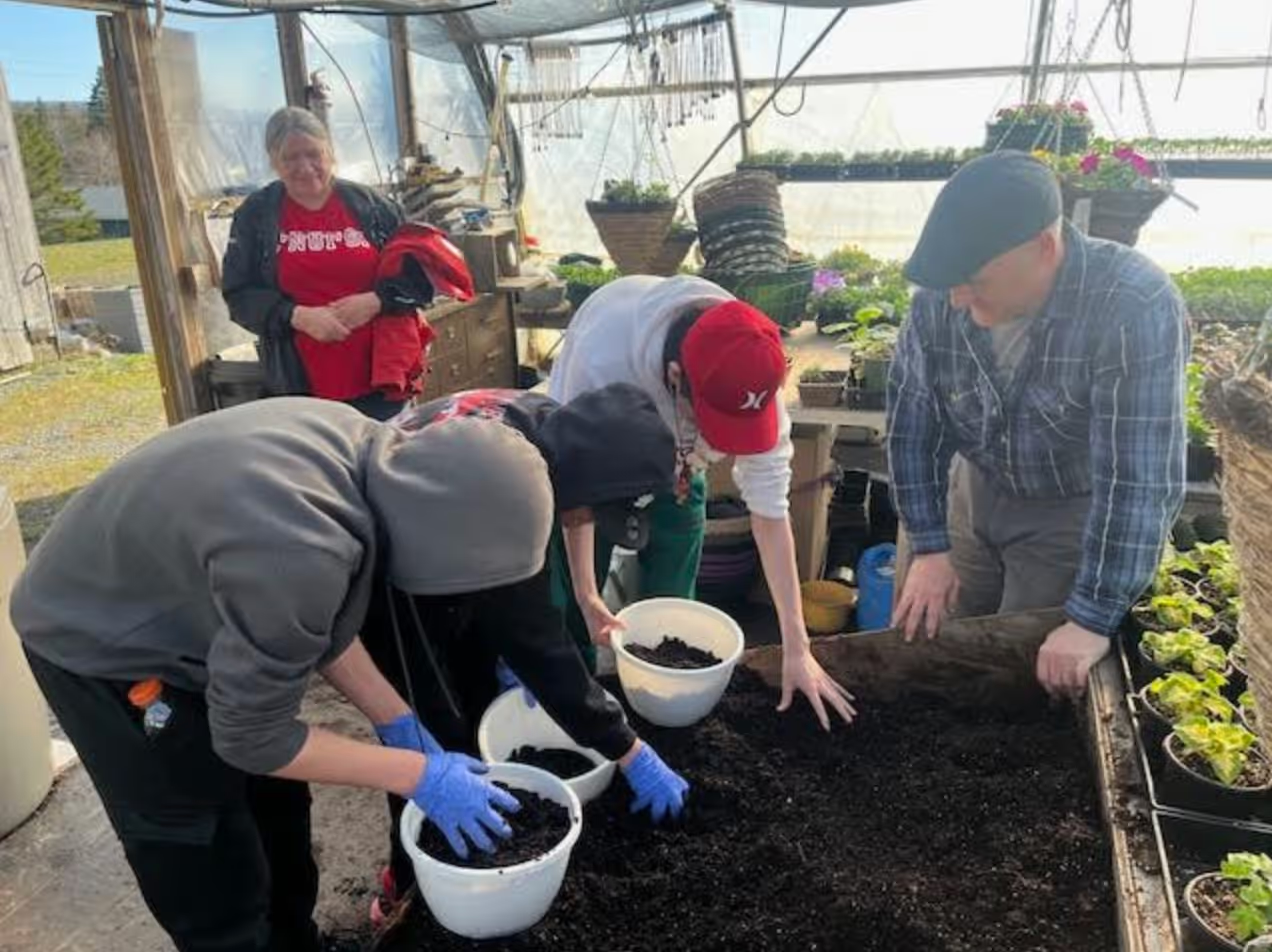

Potlotek's Mi'kmaw Language Nest
Jasmine Ma’sl is helping revitalize Mi’kmaw through a home-based Language Nest, where children learn through play, songs, meals, and daily life entirely in Mi’kmaw — helping raise a new generation of first-language speakers.
Around the world, Indigenous communities are finding powerful ways to reclaim and revitalize their languages. One of the most successful models began in New Zealand with Māori communities in the early 1980s through Kōhanga Reo, or “language nests.” These early childhood immersion spaces were created to surround young children with fluent speakers, culture, songs, and everyday conversation in the Māori language. The movement became internationally recognized as a groundbreaking example of language revitalization and has inspired Indigenous communities across the globe.
That same spirit of renewal can now be seen here in Mi’kma’ki through the work of Jasmine Ma’sl.
Jasmine grew up in both Potlotek First Nation and Millbrook First Nation. While the Mi’kmaw language was present around her, and many of her close relatives were fluent speakers, she did not grow up learning it herself. Like many Mi’kmaw families, language loss happened quietly over generations, often when adults switched to English so children could understand.
Today, Jasmine speaks openly about wishing she had asked her family not to stop speaking Mi’kmaw around her. That reflection became motivation.
After becoming a mother, Jasmine made a life-changing decision: Mi’kmaw would be the language of her home.
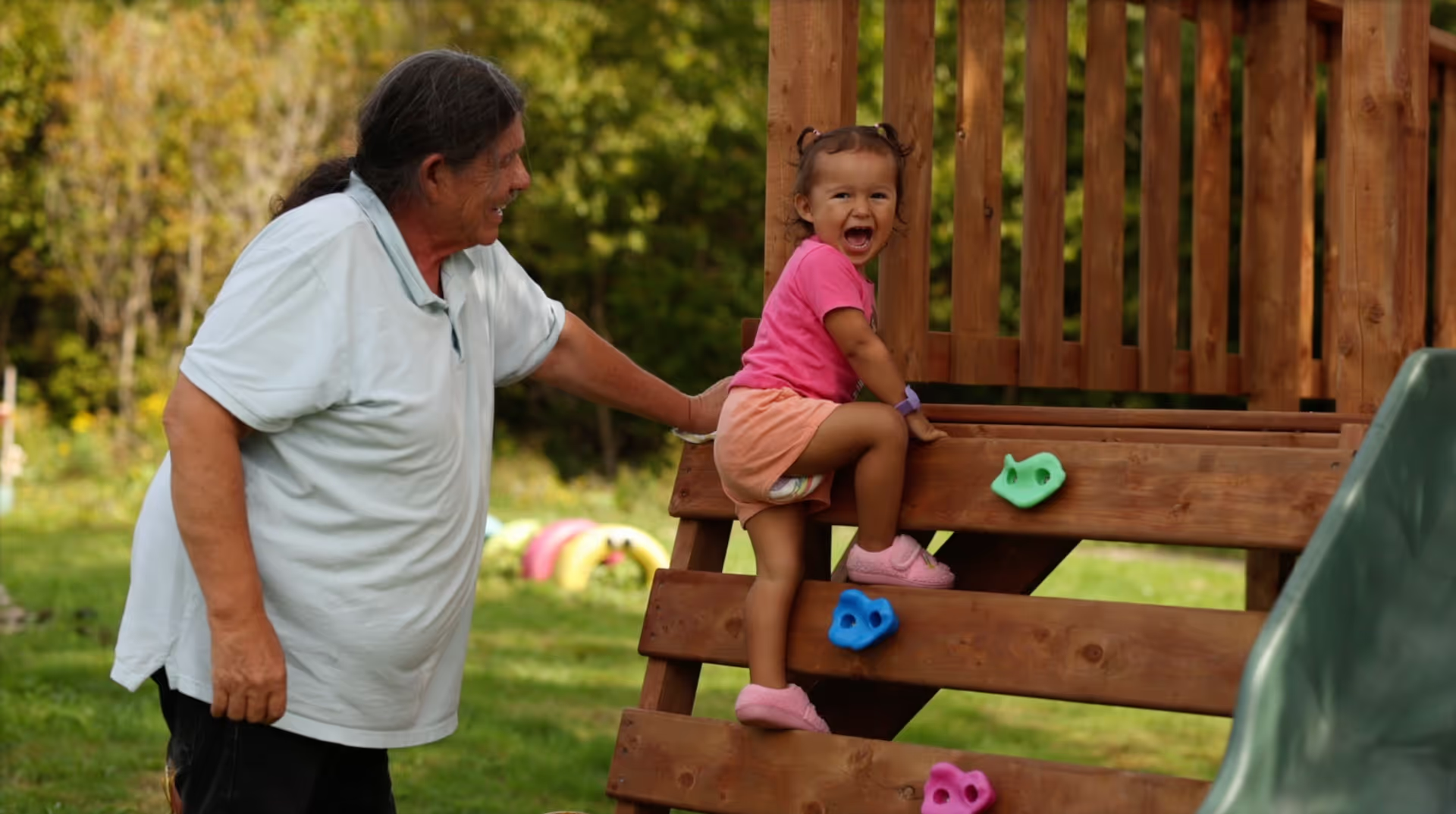
From that commitment, she eventually created a true Language Nest inside her own home. Jasmine began welcoming other children from her community, along with a parent or guardian, into the space each day to be immersed in Mi’kmaw through play, meals, songs, routines, and everyday life.
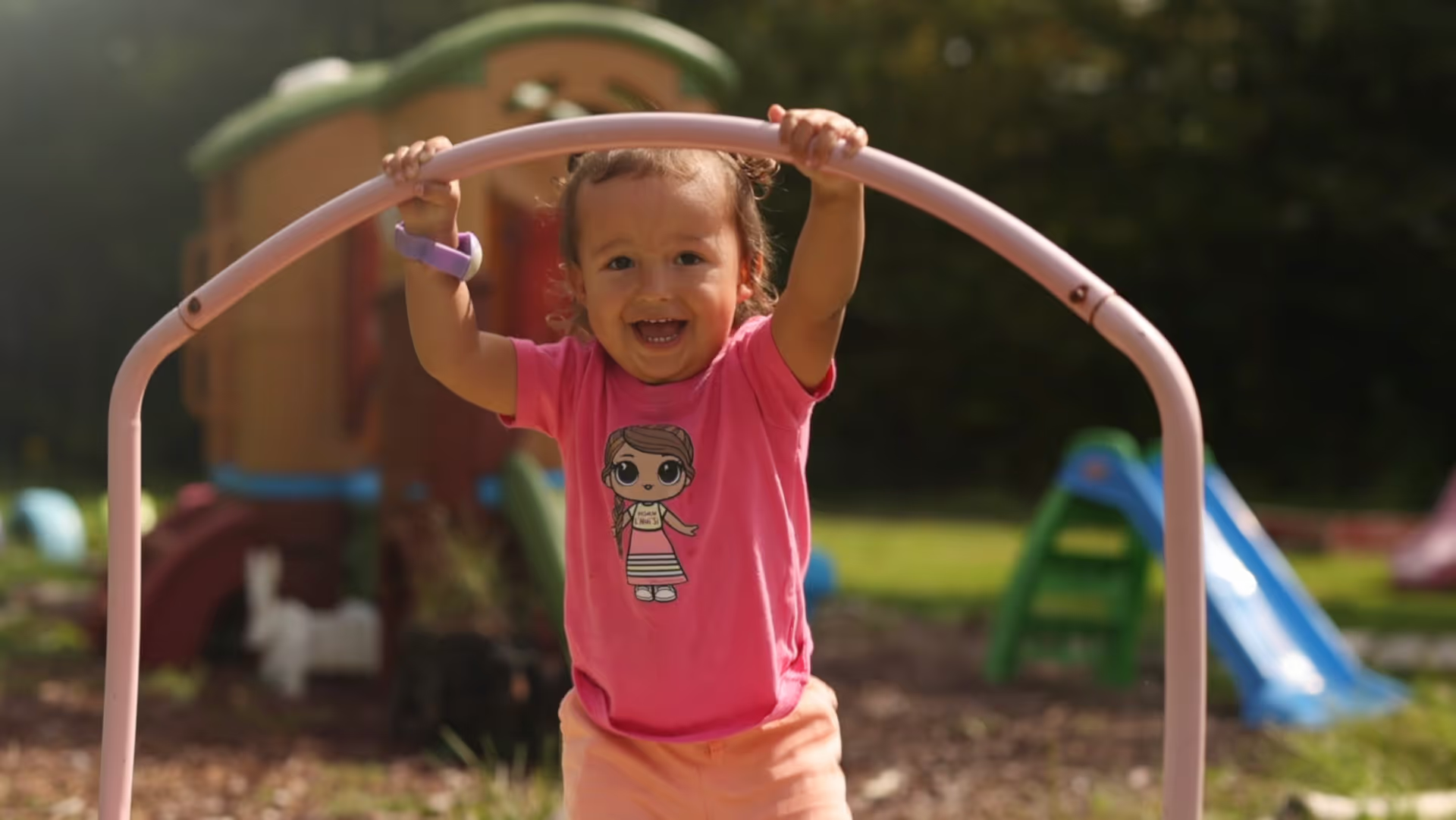
With fluent staff and community speakers present, the children hear Mi’kmaw constantly in natural, joyful settings rather than only in formal lessons. They are learning the language the way children have always learned language — through connection, repetition, dance, laughter, and belonging.
For some of these children, they are among the first in recent generations to grow up speaking Mi’kmaw from the very beginning, with first words formed in the language of their ancestors.
Jasmine’s own journey to fluency began with determination and creativity. Before starting the nest, she committed herself to learning Mi’kmaw step by step. She practiced speaking at home with her dogs — a lighthearted way to build confidence without fear of making mistakes — then with friends, family, and eventually the wider community.
As an educator, Jasmine has also created children’s videos featuring nursery rhymes and other engaging tools designed to help young learners hear and use the language in joyful ways.
Her story is a reminder that language revitalization does not only happen in classrooms or institutions. Sometimes it begins in kitchens, living rooms, and family conversations.
One home. A handful of children. A language spoken every day.
That is how futures are rebuilt.
.avif)

.avif)